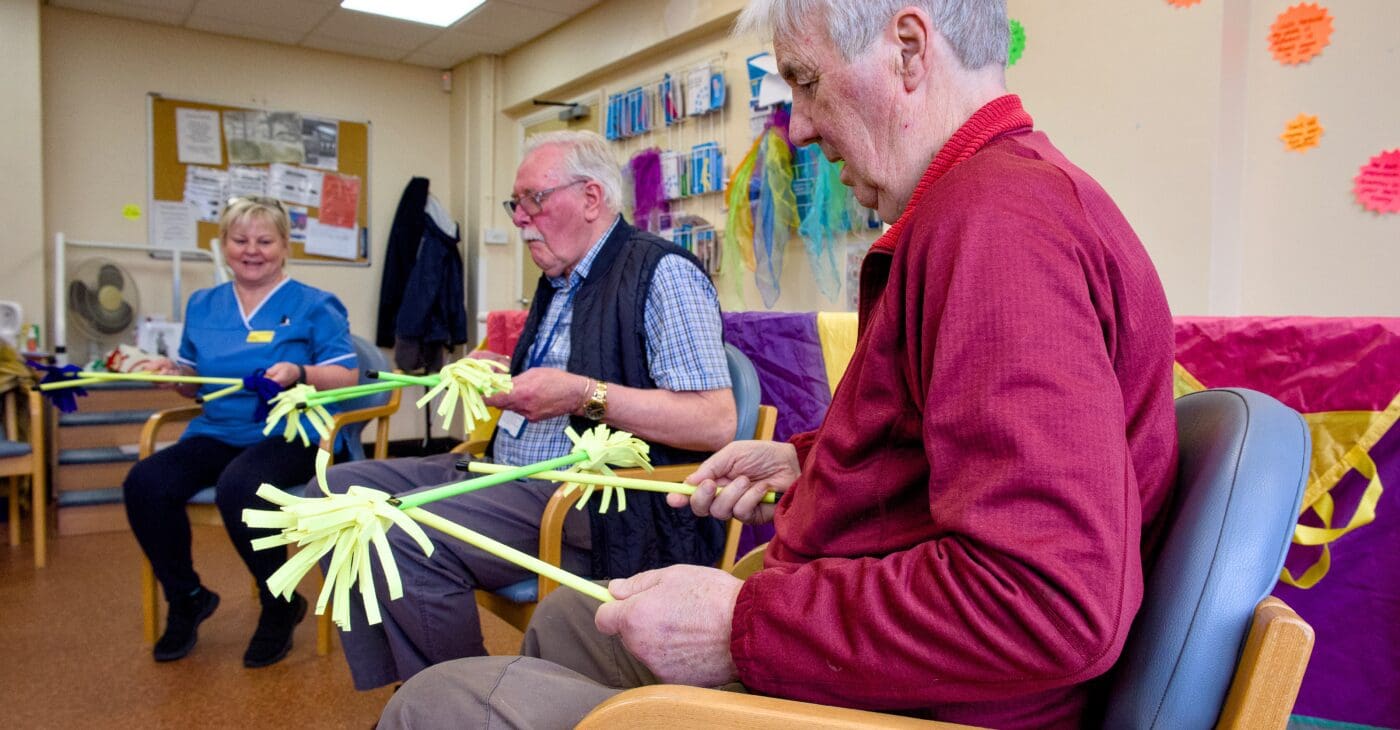
A story contributed by Gareth, a volunteer with a Parkinson’s support group who took part in our Homemade Circus project, delivered in partnership with Parkinson’s UK to bring circus skills to people living with Parkinson’s. Here, he describes what changed for the group’s least mobile members, and the volunteer challenge that popularity brought with it.
The most significant change I’ve seen through the Homemade Circus project has been in some of our members with more advanced Parkinson’s, particularly people who are in wheelchairs.
When I first became involved, I wasn’t entirely sure what to expect. We discussed it at committee level and a few of us volunteered to do the training. As things turned out, it largely fell to me to run the sessions.
Brendan [Homemade Circus Lead Artist] was brilliant at what he did and seeing him come through the door week in, week out was a relief because you knew you had him there as support straight away. He’d absorb some of that pressure himself by being a trainer, a juggler and everything else, and he passed those skills on to us.
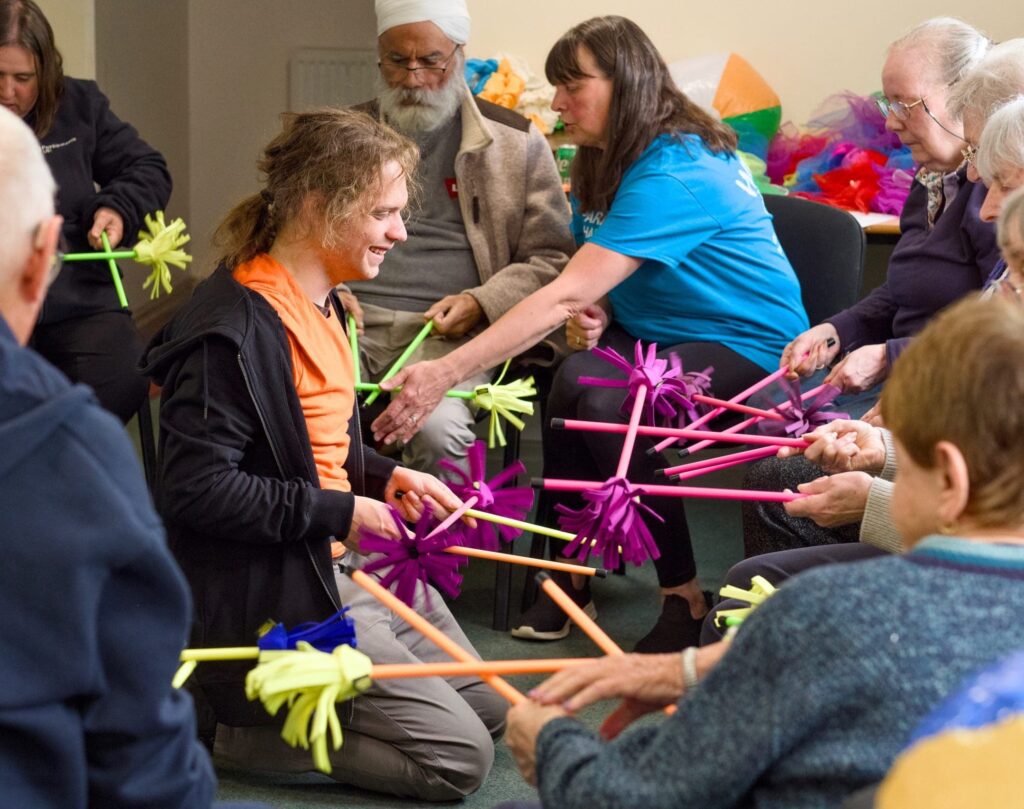
“You can see some movement out of people that wasn’t there before.“
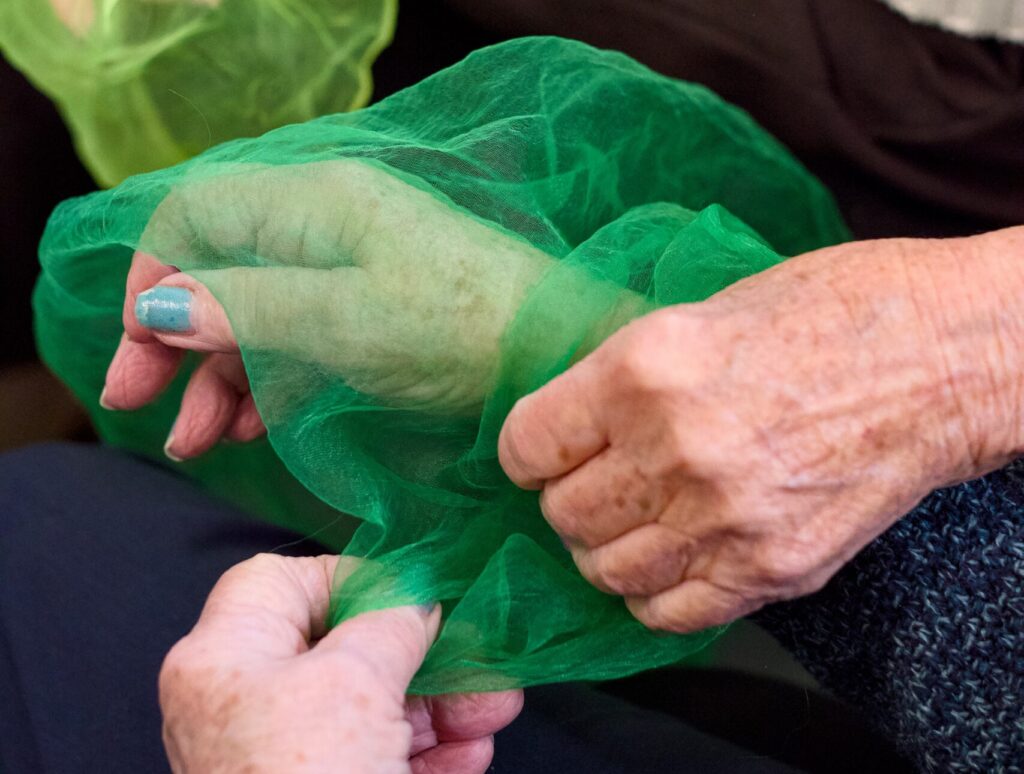
What has surprised me most is the impact the activities have had on the people taking part. Some weeks there are people who sit quietly in their wheelchairs and don’t speak very much. Then all of a sudden their face lights up. They get involved in the activity and they enjoy participating. Whether it’s using the parachute, balancing peacock feathers, passing the beach balls or working with the foam blocks, people want to have a go.
The people in wheelchairs have reacted particularly well. I couldn’t tell you exactly why, but I think it makes them light up a little bit because of the feeling of doing something for themselves. Their husband, wife or partner might be sitting nearby watching them, and suddenly they’re actively taking part rather than just observing. There’s something really powerful about seeing that. You’ve got to have a motivator there, haven’t you, to bring it out of them, and these activities seem to do that.
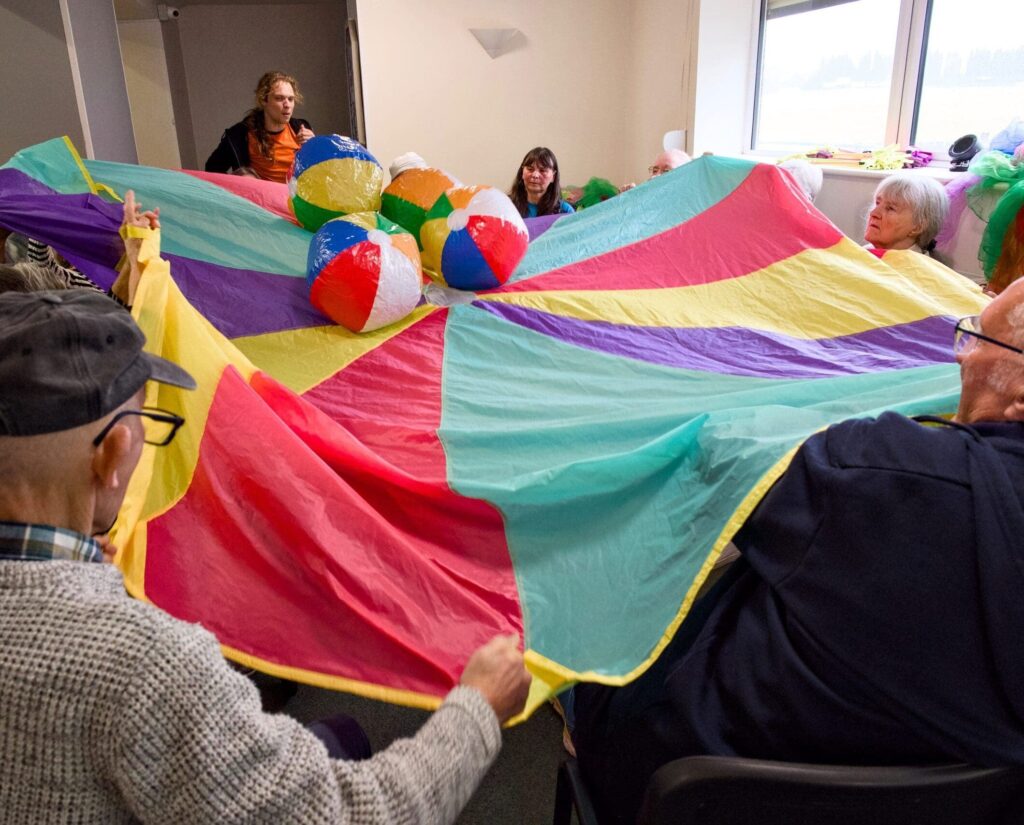
What I like about the circus activities is that they aren’t seen as therapy or exercise. People are just enjoying themselves. Sometimes we’ll be using the elasticated circle and I’ll get everyone pretending they’re rowing like the Norwegians in the World Cup. Other times we’ll be working together with the parachute.
“They’re simple things, but they encourage movement, concentration, communication and laughter. Most importantly, they get people involved. “
The project has also shown me how much people value these sessions because they’ve become incredibly popular. My recommendation has always been that we have no more than ten people in the circle because once you get beyond that it becomes difficult to manage. But once people know the session is happening, they just keep wanting to come in. Before you know it, you’ve got eleven, twelve, thirteen or fourteen people joining in.
It shows that people enjoy it, but it’s also a real challenge. It’s too many for me to cope with on my own. I’ve tried to encourage the group to put some limits in place, but when something is popular it’s difficult to say no.
If I’m speaking candidly, there have been times when I’ve felt I’ve had enough of it, and that’s not because I don’t believe in the project. It’s because we’re running short of volunteers at the moment and we’re losing numbers in the group generally.
“What this project has really highlighted for me is the importance of training more people.”
We could do with some encouragement in our area to get more people to support Parkinson’s groups as volunteers.
Once we’ve got more able-bodied people who are capable of supporting us, it would make a huge difference. We could still do with more people being trained in the circus skills because the demand is there. People want to do it. The benefits are obvious. The challenge is making sure there are enough people to help deliver it.
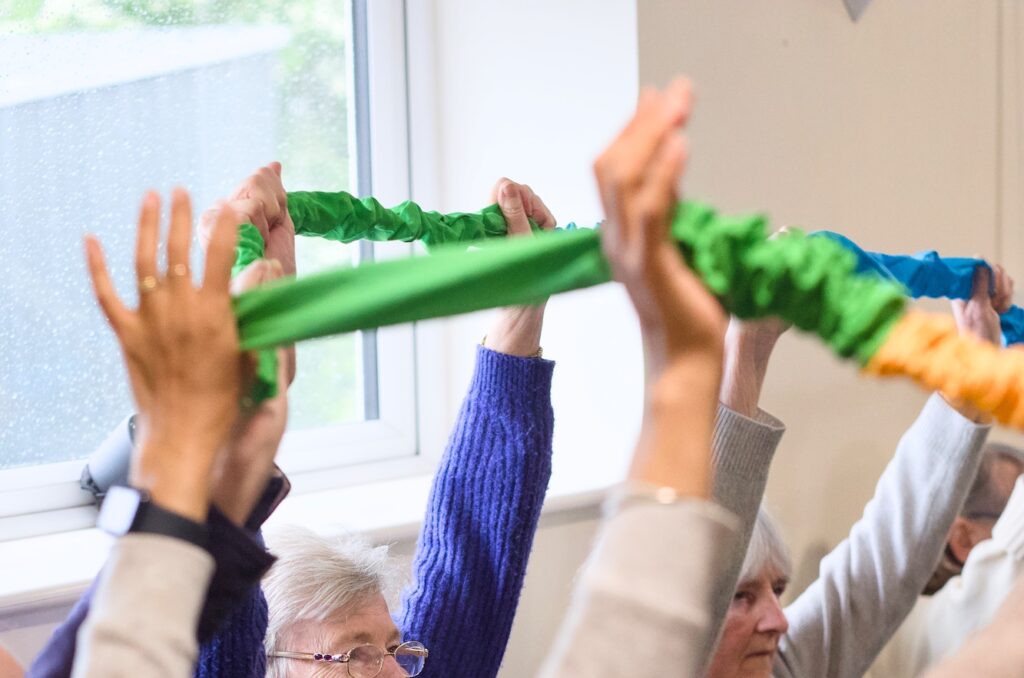
For me, that’s why this change is so significant. It isn’t just that people enjoyed themselves, although they certainly did. It’s that we’ve seen people with Parkinson’s, especially those with very limited mobility, become more engaged, more expressive and more willing to participate.
“We’ve seen people surprise themselves with what they can do.”
It is beneficial for people with Parkinson’s. We have seen a change in some people, and the most noticeable improvements have often been among the people you might least expect.
The fact that so many people want to keep coming back tells its own story. The project has created something that people value, something that helps them connect with others and something that gives them confidence to take part. Now the challenge is making sure we have enough volunteers and support to keep it going.
Gareth volunteered for Upswing’s Homemade Circus pilot with Parkinson’s UK Stoke-on-Trent Health and community settings from Mar – Jun 2026. The feedback we received from volunteers and participants like Gareth, Jeanette and Roger, directly shaped the updates we’ve made to the Homemade Circus Digital Toolkit.
The Toolkit is a free resource that gives care staff, volunteers and support group leaders the exercises, guidance and confidence to run their own circus-inspired movement sessions, without needing any previous experience.
Photo Credits: Jerome Whittingham