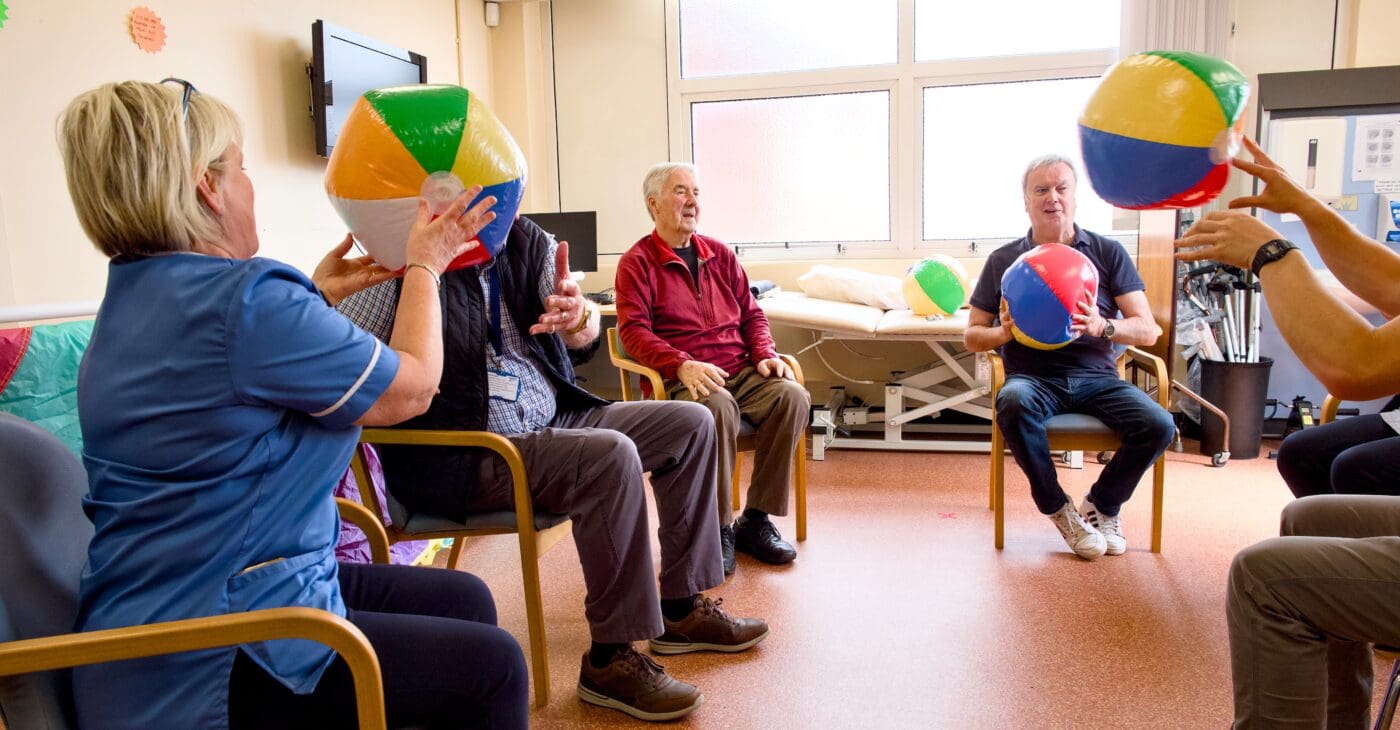
A story contributed by Jeanette, a volunteer and secretary with a Parkinson’s support group who took part in our Homemade Circus project, delivered in partnership with Parkinson’s UK to bring circus skills to people living with Parkinson’s. Here, she describes the change she noticed in her group over the course of the sessions.
When I first signed up for the circus training, my hope was quite simple. I wanted to provide something different for people living with Parkinson’s; a different way to exercise that could help improve mobility and dexterity. I wasn’t sure how people would respond. I thought some members would enjoy it, but I doubted whether others, particularly those who don’t usually join in activities, would engage.
The most significant change I’ve seen is that the circus activities have brought people together in ways that hadn’t happened before.
Like many groups, our members tend to sit in the same seats every week and spend time with the same people. They know the people at their table, but not necessarily everyone else in the room. The circus sessions changed that. Suddenly everyone was standing or sitting together in a circle, working in pairs, learning names, throwing balls to one another and collaborating on exercises. People who wouldn’t normally interact began talking, laughing and working together.
“What surprised me most was seeing people who don’t usually participate, fully engage with the activities.”
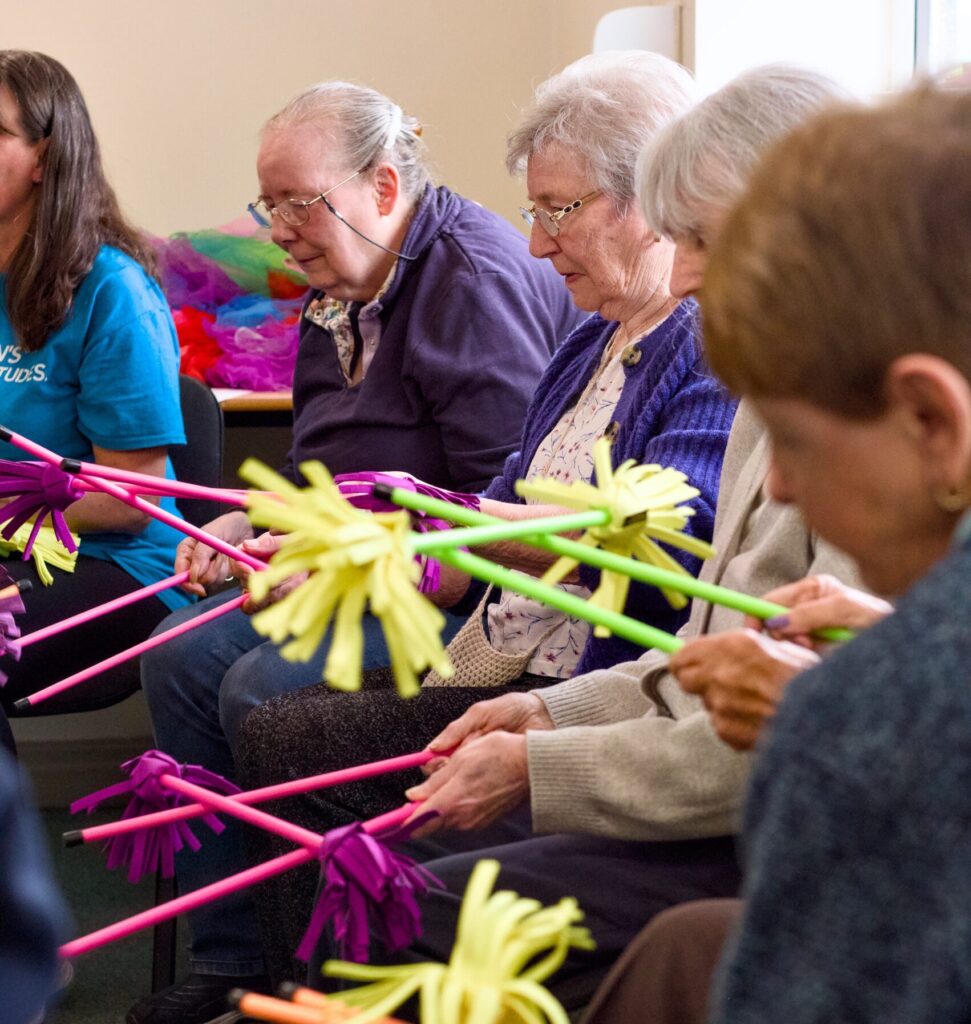
Because circus skills are new to everyone, there isn’t any pressure to be good at it. If someone drops a ball or struggles with an exercise, it doesn’t matter. It creates a safe space where people feel comfortable trying something different. That sense of safety has encouraged people to join in who might otherwise have sat on the sidelines.
The sessions are full of laughter. Members often tell me they can’t believe how much exercise they get from something as simple as a foam block. The activities improve physical movement and dexterity, but the benefits go far beyond that. There is a social connection and confidence-building element that has been just as important. People enjoy succeeding at something new and seeing what they can achieve.
“One of the things I’ve loved most is watching members work together.”
Partner activities and group challenges encourage communication and cooperation, strengthening relationships across the group. As a result, people are getting to know one another better, and I genuinely believe the group feels more connected than before.
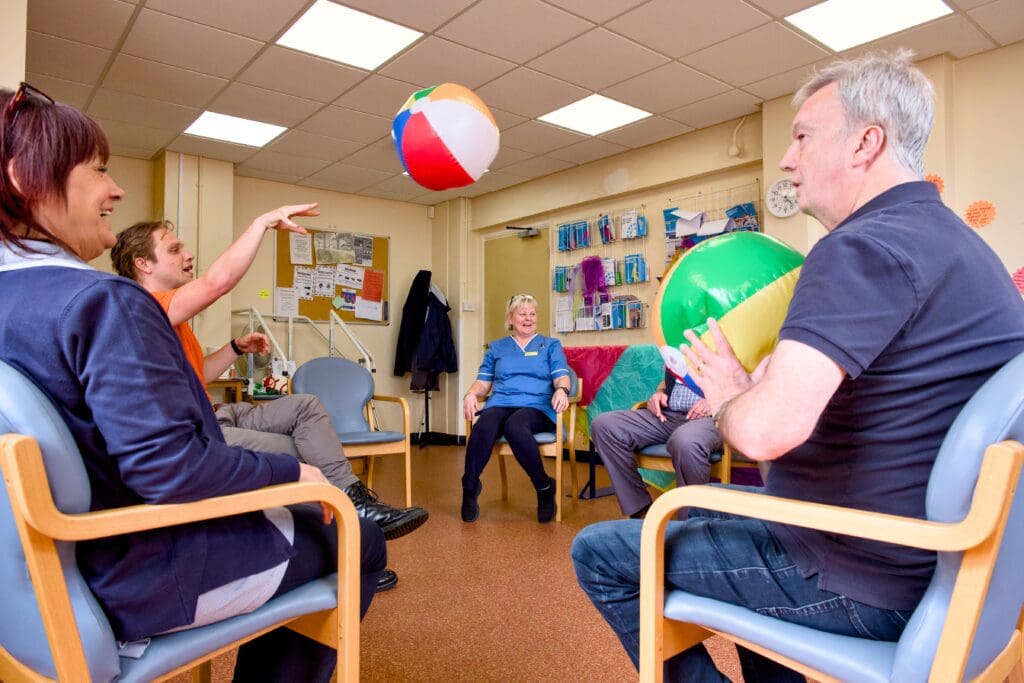
Without this programme, I don’t think these changes would have happened.
Members would not have spent time interacting with different people, learning each other’s names, or building relationships outside their usual friendship circles.
Some participants who rarely engage in activities would have missed the opportunity to discover something they genuinely enjoy.
“The circus sessions gave people a reason to move, connect, laugh and try something new in a supportive environment.“
The training also left a lasting legacy. Although I worried we wouldn’t be able to continue the sessions once Brendan stopped delivering them, we’ve successfully carried them on ourselves. Every time I announce that it’s time for circus skills, people eagerly come over to take part. That enthusiasm tells me how much they value the activity.
Brendan’s [the project’s lead artist] energy and approach were instrumental in making the programme a success. He brought a sense of fun and possibility that really connected with our members. Most importantly, he introduced an activity we would never normally have considered for people with Parkinson’s, but which has proven incredibly beneficial.
For me, the lasting impact is that circus skills have become much more than a form of physical exercise. They have helped create a stronger, more confident and more connected community within our group.
What was the most significant change?
The most significant change is that the circus programme transformed how members connect with one another.
While physical benefits were important, the greatest impact was social: people who previously stayed within familiar routines began interacting with new people, building confidence, and participating in activities they might otherwise have avoided. This increased sense of belonging and connection has strengthened the group and continues even after the formal programme has ended.
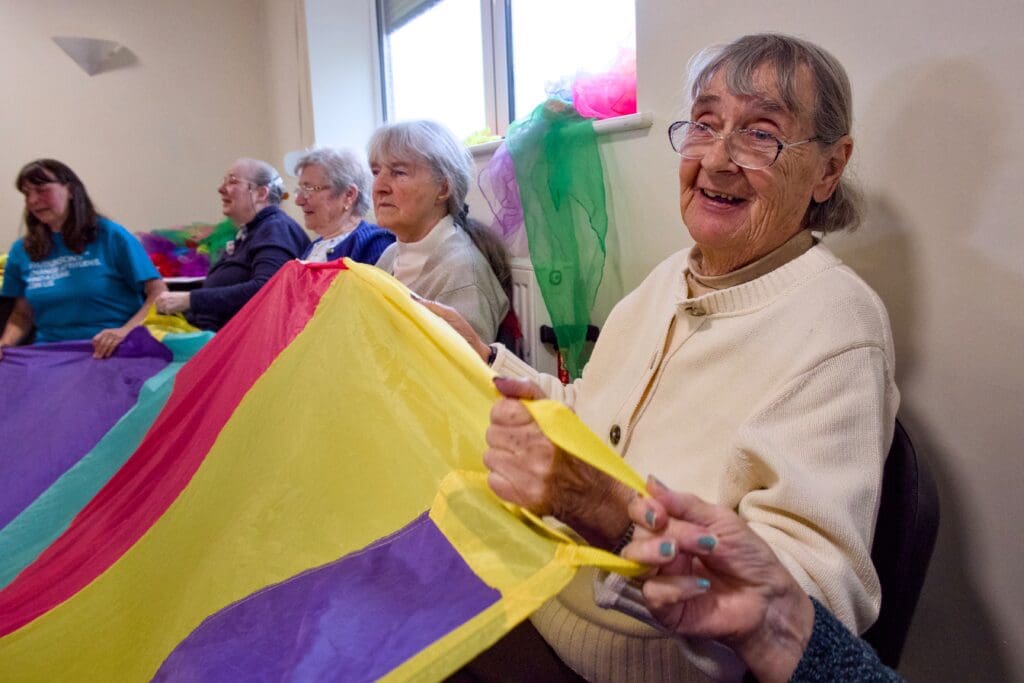
Jeanette volunteered for Upswing’s Homemade Circus pilot with Parkinson’s UK Stoke-on-Trent Health and community settings from Mar – Jun 2026. The feedback we received throughout this pilot from people like Jeanette, Gareth and Roger, directly shaped the updates we’ve made to the Homemade Circus Digital Toolkit.
The Toolkit is a free resource that gives care staff, volunteers and support group leaders the exercises, guidance and confidence to run their own circus-inspired movement sessions, without needing any previous experience.
Photo credits: Jerome Whittingham